


You know that sinking feeling when your carrier sends a "you've used 90% of your data" text, and the billing cycle isn't even half over? Or when a video call buffers and you suddenly wonder, "Wait, how much data do I even have left?"
The good news: every phone, whether it runs Android or iOS, already tracks your data usage for you. You just need to know where to look. This guide walks you through checking total data usage, seeing which apps are eating your data, setting alerts so you never get caught off guard, and a few practical fixes if your data keeps running out faster than expected.
Why Checking Your Data Usage Actually Matters
Most people only check their data usage after they've already run out, which is a bit like checking your fuel gauge after the car has stopped.
Knowing your usage patterns ahead of time helps you:
- Avoid surprise charges or a mid-month data top-up
- Spot an app that's silently draining your plan in the background
- Plan better if you're traveling and relying on a fixed data pack
- Decide whether you actually need a bigger (or smaller) plan
With that out of the way, let's get into the actual steps.
How to Check Data Usage on Android
Android's exact menu names vary a little between brands like Samsung, Xiaomi, OnePlus, and stock Android (Pixel), but the general path is nearly identical everywhere.
Steps for most Android phones:
- Open Settings and tap the Search bar at the top of the screen.
- Type "Data usage" or "App data usage".
- Tap the primary result to jump straight to your data counter and the ranked list of apps eating your data.
- You'll see your total data used in the current billing cycle, along with a graph showing daily usage
If you have a dual SIM, Android will usually let you pick which SIM's data usage you want to view, which is handy if you're using one SIM for calls and a second SIM or eSIM for data.
On Samsung phones specifically: Settings > Connections > Data usage > Mobile data usage
On Xiaomi (MIUI/HyperOS): Settings > SIM cards & mobile networks > Data usage
Once you're on the data usage screen, tap on it to see a breakdown by app, which brings us to the next section.
How to Check Which Apps Are Using Your Data
Total usage tells you the "what," but app-level usage tells you the "why." This is where most people find the real culprit, often a social media app doing background auto-play, or a cloud backup service syncing photos over mobile data.
On Android:
- Go to Settings > Network & Internet > Data usage
- Tap Mobile data usage
- Scroll down to see a ranked list of apps by data consumed
- Tap any app to restrict its background data or set it to only use Wi-Fi
On iPhone:
- Open Settings and tap the Search bar at the very top. (Note: If you don't see it, just swipe down slightly on the main settings screen to reveal it).
- Type "Mobile Data" (or "Cellular" if your phone is set to US English).
- Tap the top search result to go directly to your data tracking toggles.
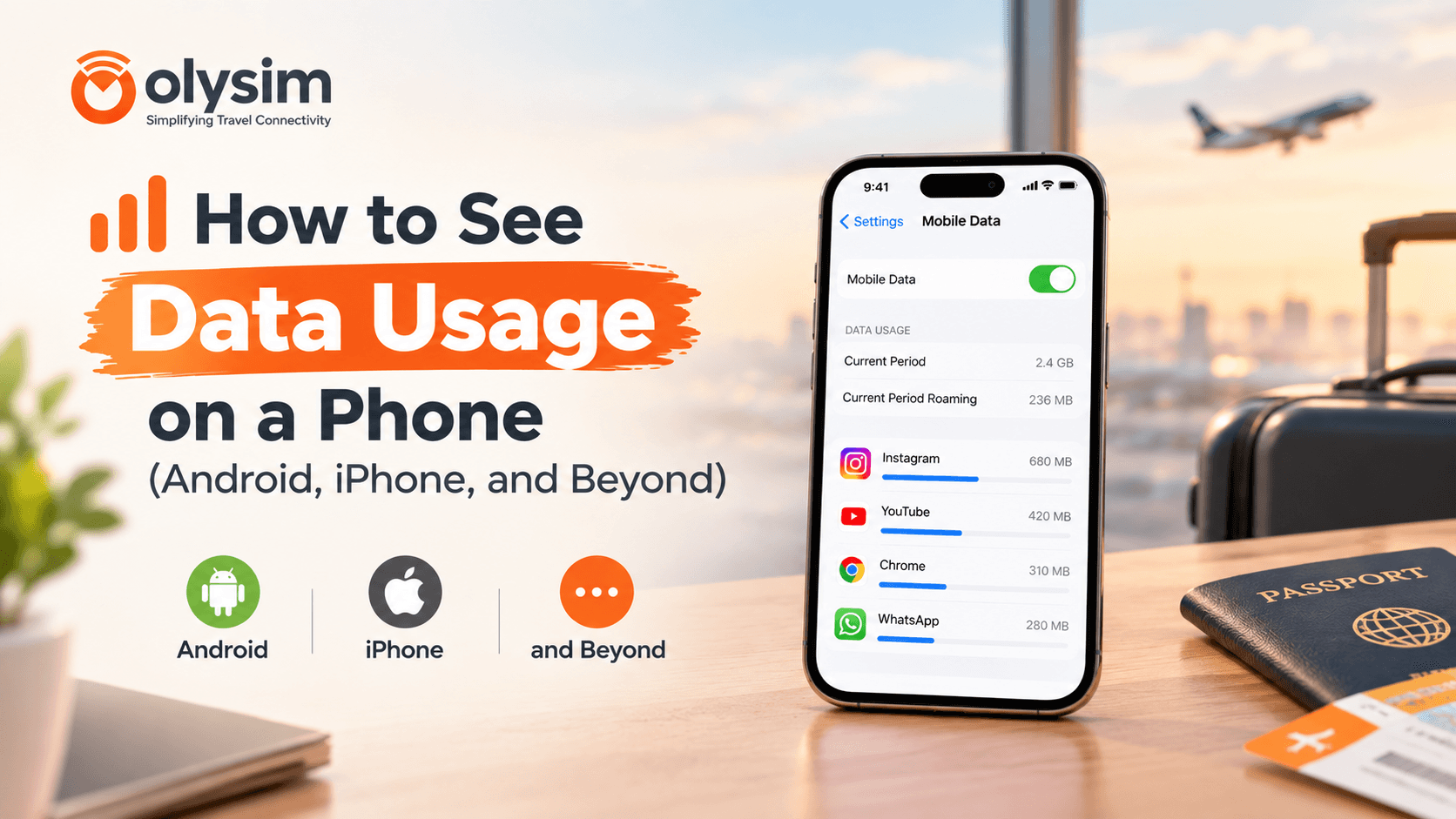
- Scroll further down to see the Mobile Data section listing every app and how much data it has used
- Toggle any app off here to stop it from using mobile data entirely
A tip that surprises a lot of people: iPhone's data counter never resets automatically at the start of your billing cycle. It accumulates data continuously until you manually scroll to the very bottom of the menu and tap Reset Statistics.
How to Set Data Usage Alerts and Limits
Rather than checking manually every few days, you can set your phone to warn you (or even cut off data) before you hit your limit.
On Android:
- Settings > Network & Internet > Data usage > Data warning & limit
- Turn on Set data warning and enter the amount at which you want to be notified
- Turn on Set data limit if you want your phone to automatically disable mobile data once you hit that number
On iPhone: Apple doesn't offer a built-in hard data cutoff limit the way Android does, but you can turn on Low Data Mode (under Mobile Data Options) to automatically pause background tasks and automatic updates. You can also monitor your usage through your carrier's dedicated app, or use your carrier's app (Jio, Airtel, and Vi all have apps in India that show real-time usage and send alerts) for a more accurate, carrier-side number.
This last point matters: your phone's own counter and your carrier's counter can differ slightly, because your phone measures data at the device level while the carrier measures it at the network level. If you want the exact number your bill will reflect, your carrier's app is the more reliable source.
Common Reasons Your Data Runs Out Faster Than Expected
If you're checking usage because your data seems to vanish too quickly, a few usual suspects are worth ruling out:
- Auto-play videos on social apps, which consume data even when you're just scrolling
- Cloud backups for photos and videos are set to run over mobile data instead of Wi-Fi only
- App updates are downloaded automatically in the background
- Software updates for the OS itself, which can be several gigabytes
- Hotspot sharing is left on without you realizing that another device is connected
A quick fix for most of these: go into each app's settings and look for a "Wi-Fi only" toggle for downloads, backups, or auto-play.
Checking Data Usage While Traveling (Where It Gets Tricky)
Here's where things get a little more complicated. If you're traveling, whether within India or abroad, your phone's built-in data counter can lag behind or misreport usage when you're on a roaming network, since roaming data sometimes routes differently from your home network. This is exactly the situation where a lot of people get an unpleasant billing surprise after a trip.
This is one of the reasons more travelers have started switching to eSIMs for trips, since a good eSIM app shows your real-time data usage directly, independent of confusing roaming calculations. Olysim, for instance, is built exactly for this: you pick a data plan for your destination (India included, alongside 150+ other countries), scan a QR code to activate it in minutes, and then track exactly how much data you've used and how much is left, right inside the app. If you're close to running out, you can top up instantly without hunting for a local SIM shop or worrying about roaming charges from your home carrier.
It's a small shift, but if you've ever landed somewhere and immediately had to deal with SIM card queues or unclear data balances, having usage tracking and top-ups in one place tends to make the whole trip smoother.
The Bottom Line
Checking your data usage takes less than a minute once you know the right menu, and doing it regularly saves you from both nasty billing surprises and that annoying "no data left" wall at the worst possible moment. Set a warning limit, glance at your app breakdown once a week, and if you travel often, consider a plan like Olysim's eSIM, where usage tracking and top-ups live in one simple app instead of being scattered across settings menus and carrier portals.
FAQs
Why does your phone show different data usage than your carrier's app?
Your phone counts data at the device level (before it reaches the network), while your carrier counts it at the network level. Small differences of a few hundred MB are normal. For billing purposes, trust your carrier's number.
Does Wi-Fi calling use mobile data?
No, Wi-Fi calling uses your Wi-Fi connection, not your mobile data plan, as long as you're actually connected to Wi-Fi when the call happens.
Can you check data usage without opening Settings every time?
Yes. Most Android phones let you add a data usage widget to your home screen, and many carrier apps (like the ones from Jio, Airtel, or Vi) send daily usage summaries as notifications.
Does checking your data usage use data itself?
No, this information is stored locally on your device (or synced from your carrier account), so checking it doesn't consume any of your data allowance.
Will resetting your phone's data statistics affect your actual data balance?
No, resetting statistics only clears your phone's local counter for tracking purposes. It has no effect on your actual remaining data or your carrier's records.


